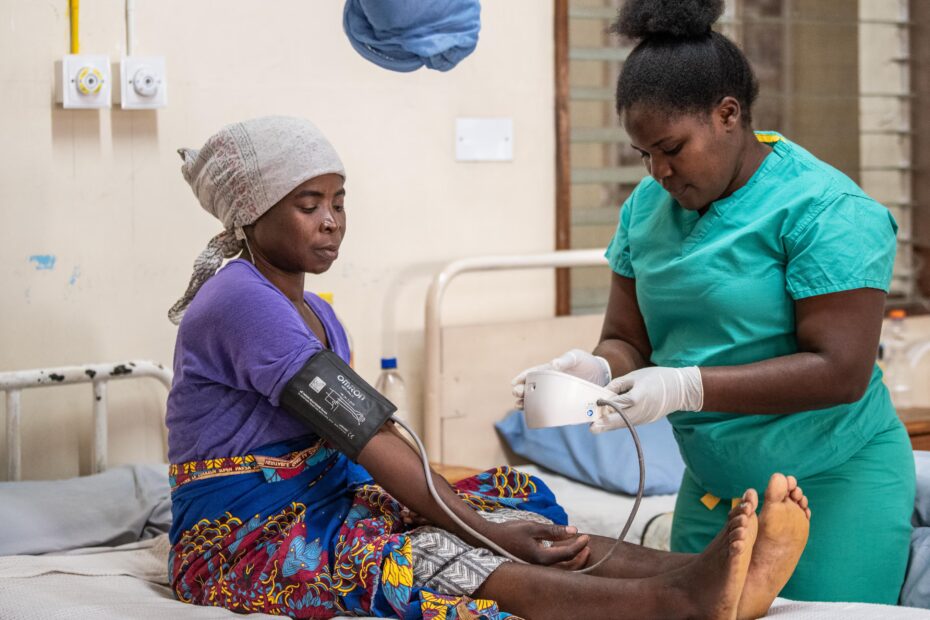
On October 5, the global maternal health community marks World Postpartum Haemorrhage (PPH) Day, drawing attention to an obstetric emergency that remains devastatingly common—and often preventable.
Established in 2025 following the WHO Roadmap to Combat Postpartum Haemorrhage 2023–2030, World PPH Day brings organizations including WHO, the International Confederation of Midwives, UNFPA and FIGO together around a shared goal: zero preventable deaths from PPH.
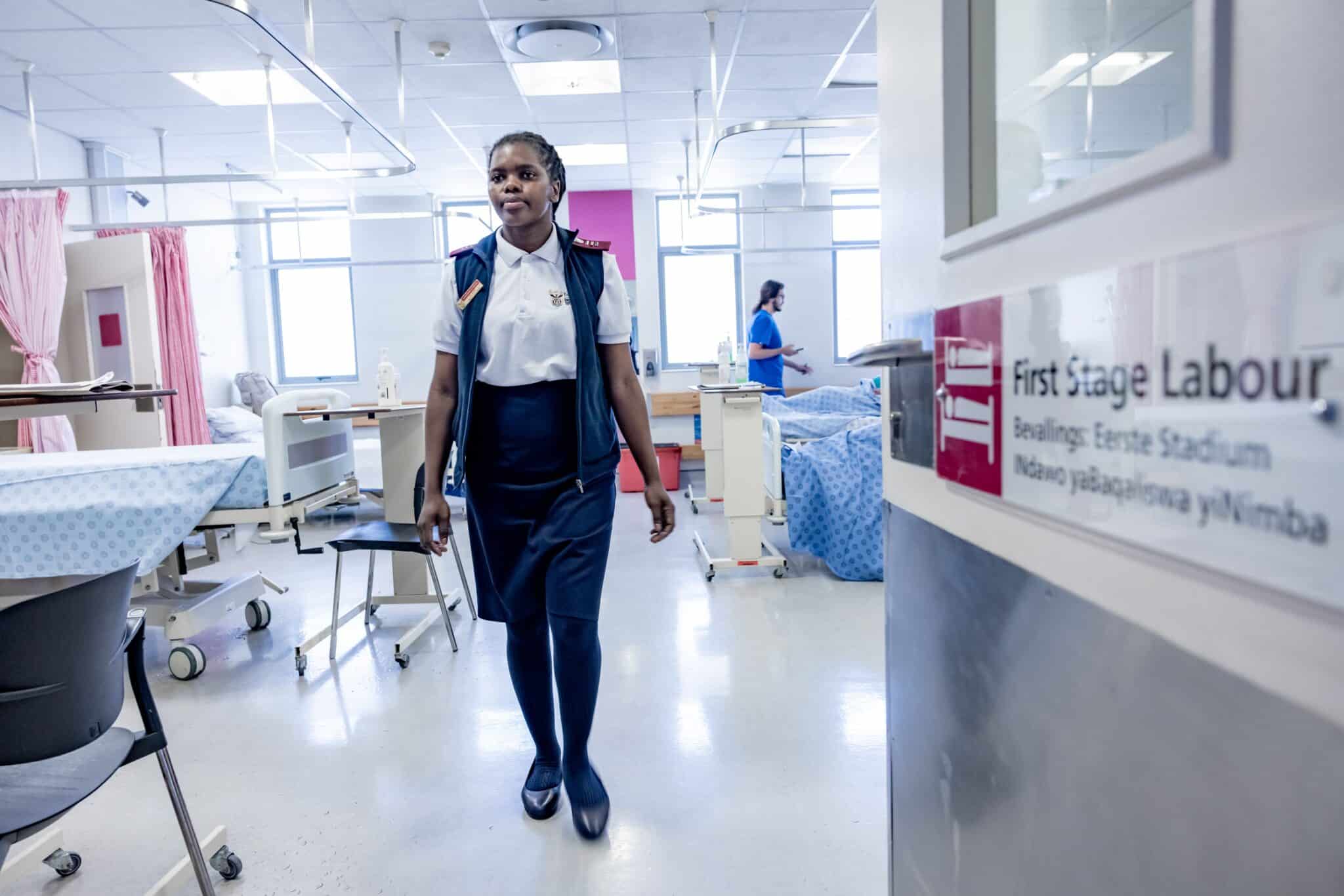
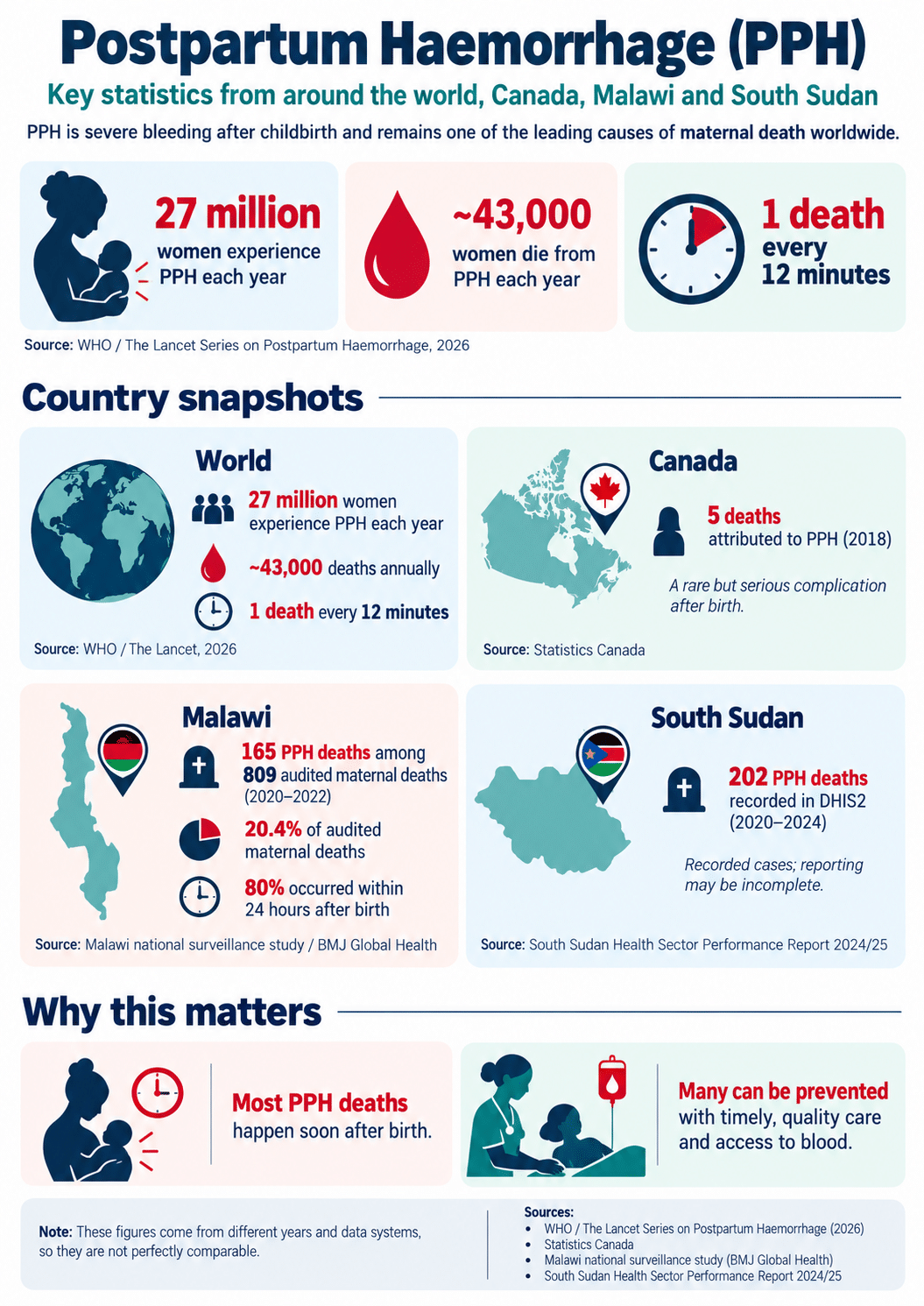
The scale remains enormous. New research published in The Lancet estimates that 27 million women experience PPH every year and approximately 43,000 die—about one death every 12 minutes.
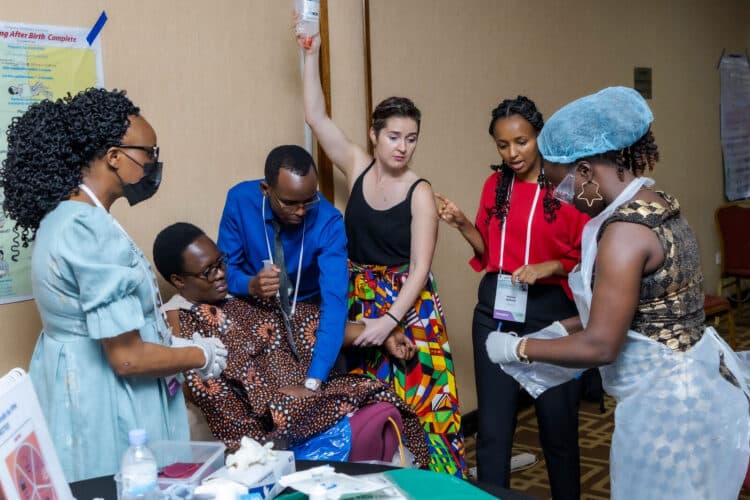
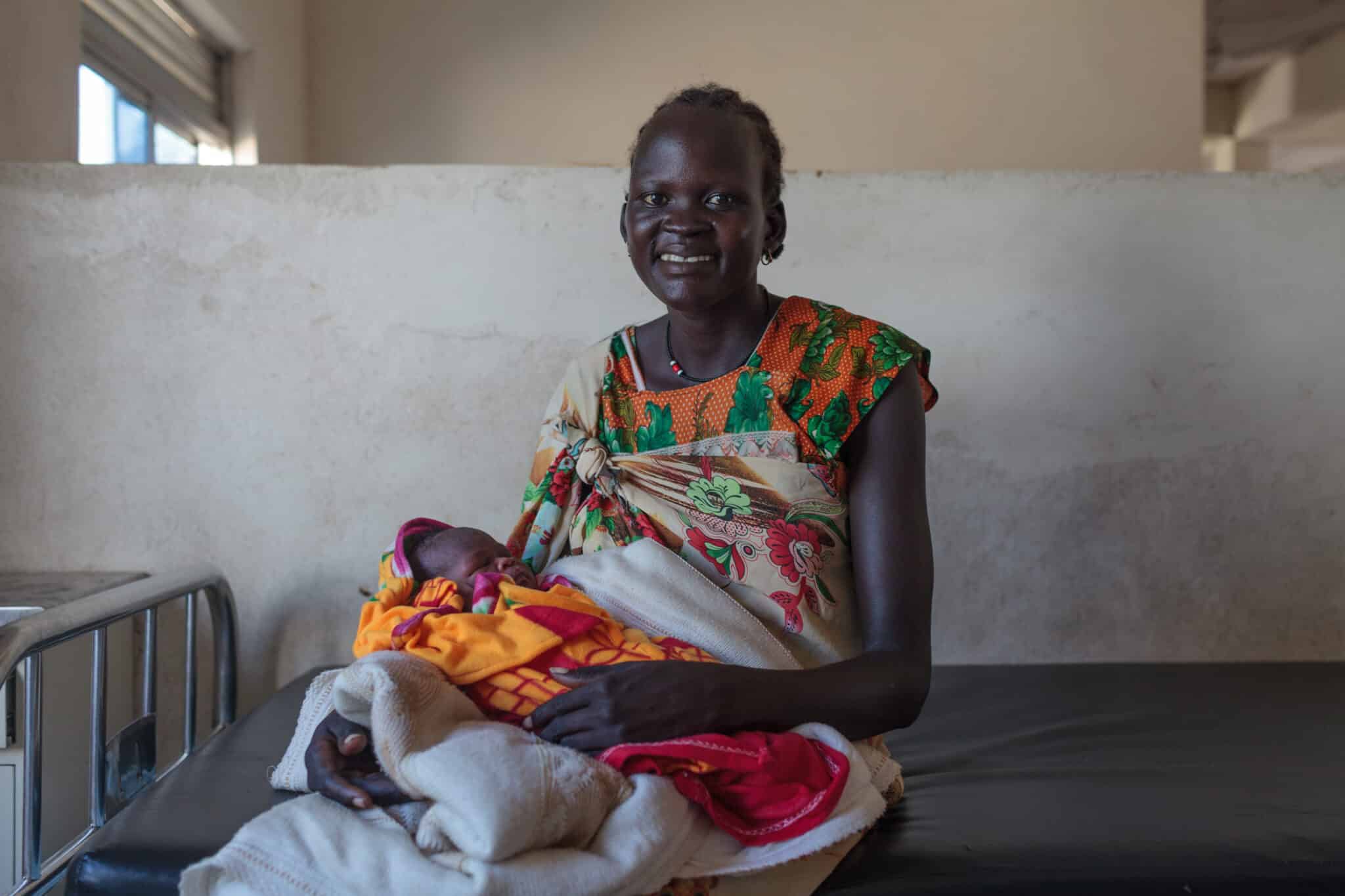
Through the TRUST project, a CAM-led initiative funded by Global Affairs Canada, the Association of Gynecologists and Obstetricians of South Sudan (AGOSS) is supporting PPH awareness and taking steps to provide life saving treatment through the first of its kind PPH blood donation drives in Bor and Torit counties. In Canada, organizations such as the Society of Obstetricians and Gynaecologists of Canada (SOGC) are similarly working to strengthen the prevention, recognition and management of PPH through evidence-based clinical guidance. The settings may be very different, but the principle is the same: health professionals need the knowledge, systems and resources to recognize bleeding early and act quickly. .
South Sudan has some of the highest maternal mortality rates in the world, and postpartum hemorrhage (PPH), or severe bleeding after childbirth, is the number one killer. Canada is not immune. Recent Ontario data found pregnancy-related haemorrhage to be the leading cause of pregnancy-related death within 42 days of birth between 2002 and 2022.
The encouraging news is that we increasingly know what works. Current WHO, FIGO and ICM recommendations emphasize earlier recognition and rapid, coordinated treatment rather than waiting until blood loss becomes catastrophic. Canadian guidance reflects many of the same priorities. The SOGC recommends quantitative rather than estimated blood-loss measurement, ongoing PPH risk assessment and rapid escalation when treatment is not controlling bleeding.
But guidelines only save lives when health workers have the training, medicines, equipment, referral systems and blood they need. That makes PPH a rights issue as well as a clinical one. Every person giving birth has the right to safe, respectful, evidence-based care and timely emergency treatment.
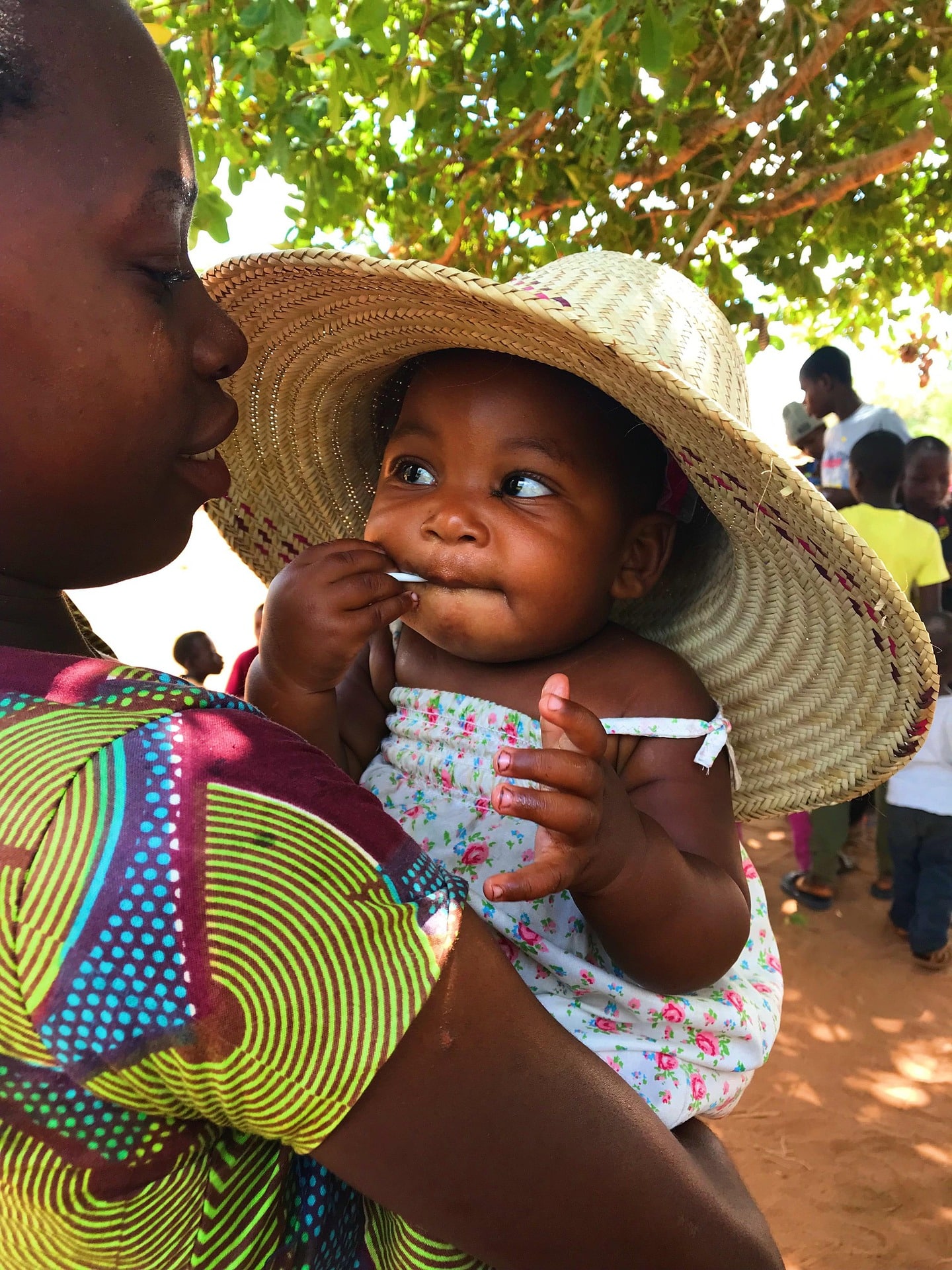
And the training saves lives. One midwife in Bor described the impact of emergency obstetric training in Bor, put it simply: “It has changed how I respond to emergencies…minutes matter.”
Canadians can help too. Blood transfusion can be lifesaving during severe PPH. Donate through Canadian Blood Services, or in Quebec through Héma-Québec.
https://jedonne.hema-quebec.qc.ca
https://www.blood.ca/en/blood/donor-centre-hours-locations
This World PPH Day, trust the evidence, equip health workers, support the midwives who are at the heart of stronger health systems.